- Home
- How it works
How a central heating leak survey works
A central heating survey is usually a full day for one engineer, and it starts with a phone call. Here is the whole sequence, what to do before the engineer arrives, and what you have in your hand at the end.
The heating leak survey, step by step
Step 1: You call the office
Tell us the postcode, how often you top the boiler up, and anything you have noticed. The office team will ask about the boiler, the number of radiators and any leak sealer, then give you a price and availability.
Step 2: You get the house ready
Top the pressure up and turn the heating on, thermostats to maximum, an hour or so before the engineer arrives. Underfloor heating stays off. Clear a path to the boiler, the radiators and the loft if it is up there.
Step 3: The engineer checks the boiler first
The gauge, the filling loop, the relief valve and its outlet pipe, the expansion vessel and every radiator valve. Some pressure problems are solved right here.
Step 4: The survey narrows it down
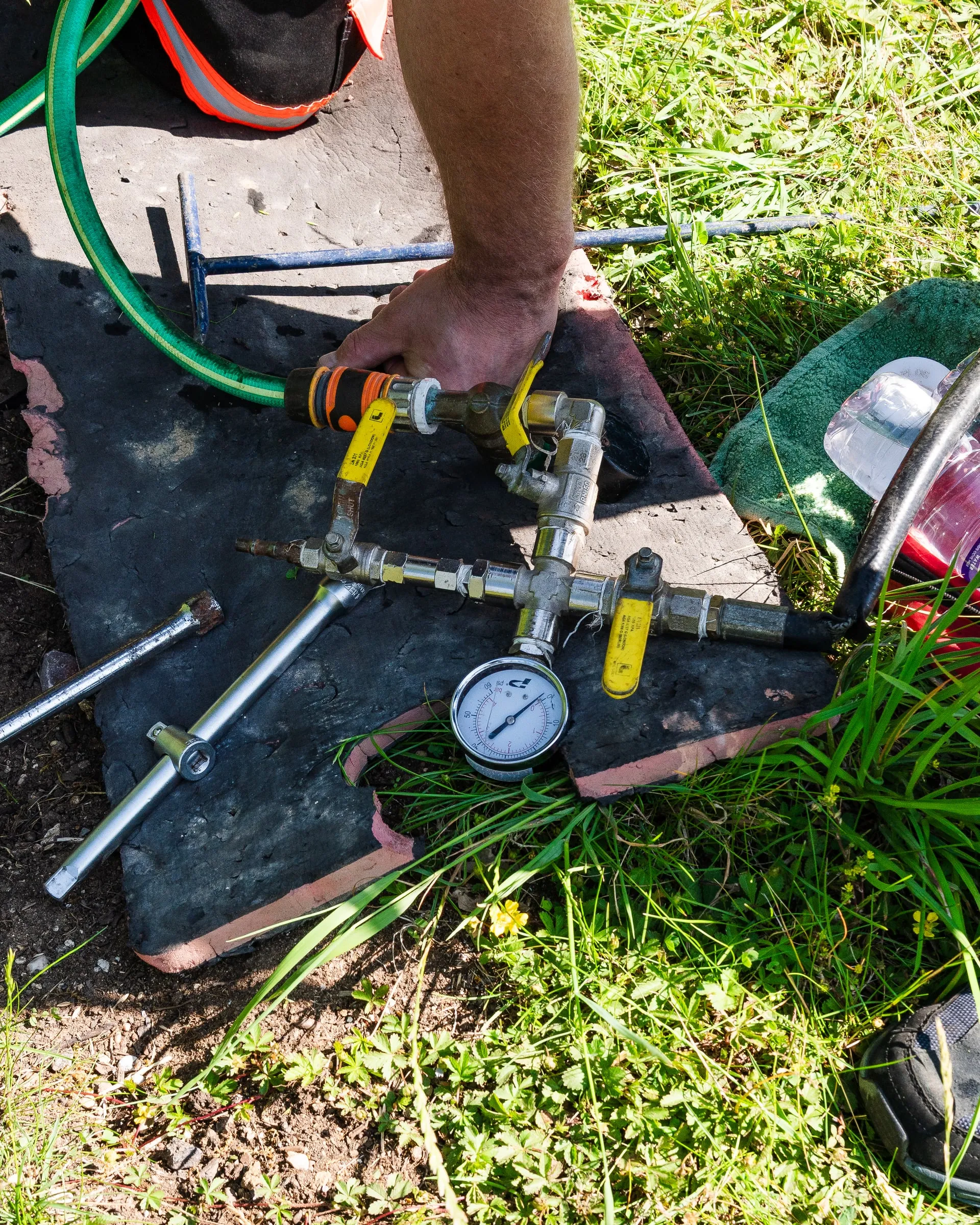
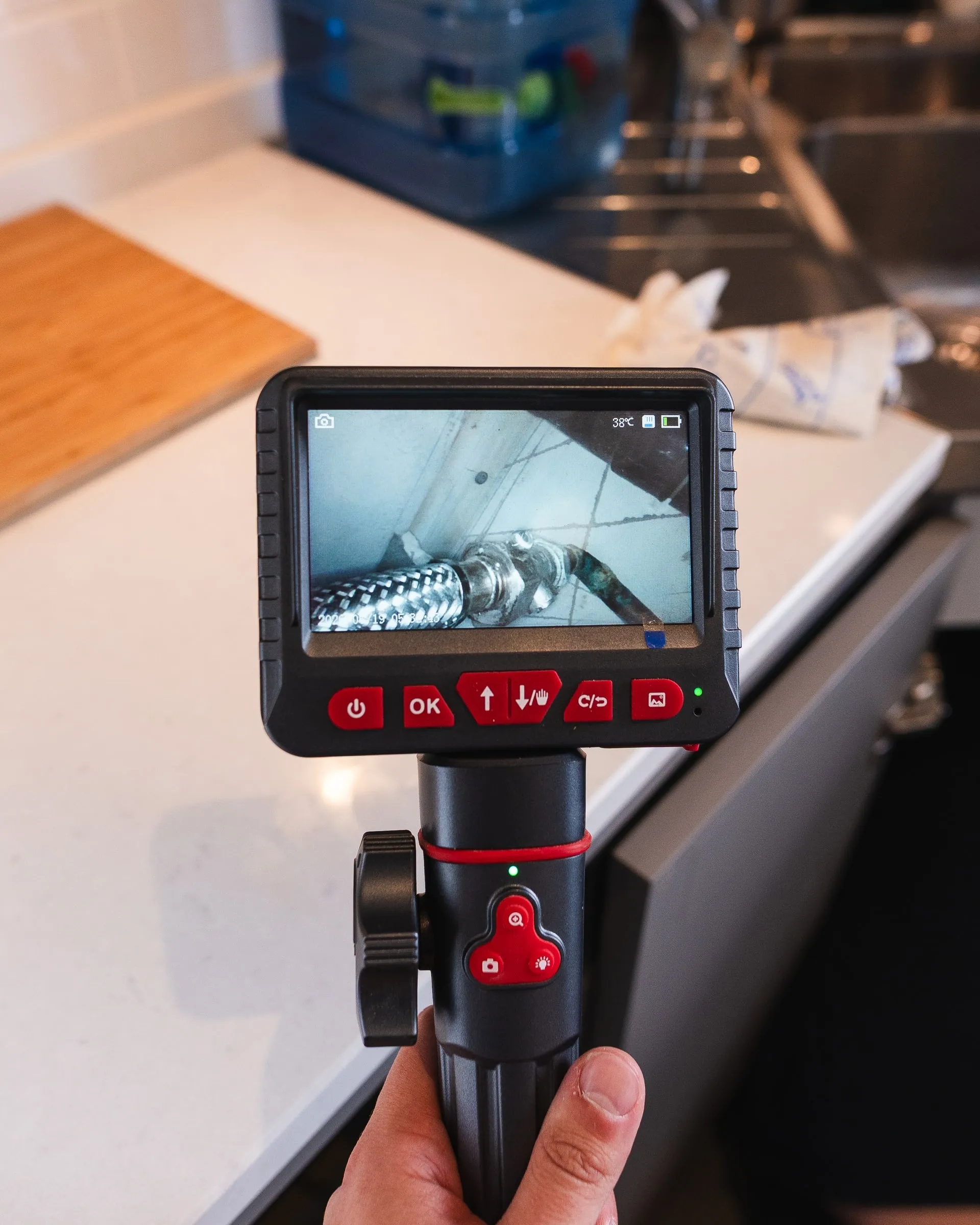
Thermal imaging maps the pipes while they are hot. The system is then drained and tested with air or tracer gas, section by section, until the leak is down to a small spot.
Step 5: Repair where it is quoted
Heating pipework leaks can be quoted and repaired on the same visit, then pressure tested before the system is refilled. You see the price before any work starts.
Step 6: You get the findings in writing
A report with photographs and findings, written so it can go straight to your insurer under trace and access cover.
Getting the house ready
Thermal imaging only works on hot pipes, so most of this is about the heating being on when the engineer walks in.
- Top the pressure up and put the heating on. About an hour before the visit, fill to 1 to 1.5 bar, switch the heating on and turn the thermostats up to maximum. If it will not hold long enough to run, tell the office.
- Leave underfloor heating off. Isolate it from early on the day of the visit. The heat it gives off stops a thermal camera seeing anything useful.
- Mention any leak sealer. If sealer has gone into the system, say so when you book. It gets in the way of tracer gas and pressure testing, and ADI advises having it flushed out first.
- Clear the way. The engineer needs to reach the boiler, every radiator, the cylinder cupboard, the loft if the boiler or tank is up there, and the outside wall where the relief valve pipe comes out.
- Parking within about 100 metres. The equipment is heavy. Parking or toll charges are passed on at cost.
- Know your history. How often you top up, when it started, any work done on the heating recently (a power flush or a new boiler included), and what other engineers have already tried.

The repair and the report
Once the leak is down to a small spot, the engineer can quote the repair there and then. On a heating pipe that usually means cutting out the bad section, fitting new pipe, and pressure testing it before the boiler is refilled.
You also get a written report with photographs that says where the leak was, how it was found and what was done. Insurers call this work trace and access, and many home policies pay for it. The repair itself is usually not covered, so ADI prices it separately and tells you before starting.
What it costs
Heating investigations are quoted on the phone from the postcode, the size of the system and what you have noticed. They are not covered by ADI's domestic "no find, no fee" guarantee, which its booking terms limit to certain water pipe leaks. Faults inside a gas boiler are written up for a Gas Safe registered engineer to fix.
Call 0333 567 2638Questions about the visit and the bill
Does my home insurance pay for this?
Many home policies include trace and access cover, which pays for finding a hidden leak and making access to it. It does not usually cover the repair itself. Check your policy before the visit; the report you get is written to go to the insurer.
Is heating leak detection covered by no find, no fee?
No. ADI's no find, no fee guarantee applies to certain domestic water pipe leaks only, and its booking terms exclude central heating systems. Heating investigations are quoted on the phone before you book, so you know the price up front.
I have put leak sealer in the system. Does that matter?
Yes, and please tell the office when you book. Sealer can block the leak for a while and it also makes tracer gas and pressure testing much less reliable. ADI advises having it flushed out before the visit, and even then some residue can remain.
Do you repair the leak as well?
Heating pipework leaks can be quoted and repaired on the same visit, then pressure tested before the boiler is refilled. Faults inside a gas boiler are written up for a Gas Safe registered engineer. Relaying flooring and making good plaster are for your own trades.
Talk to ADI about your boiler
Tell the office your postcode, how often you are topping the pressure up and anything you have noticed. They will talk through the survey, give you a price and availability, and book the engineer.
- Monday to Friday, 7:30am to 6:30pm
- Calls reach ADI Leak Detection's office in High Wycombe. Engineers cover England, Scotland and Wales.